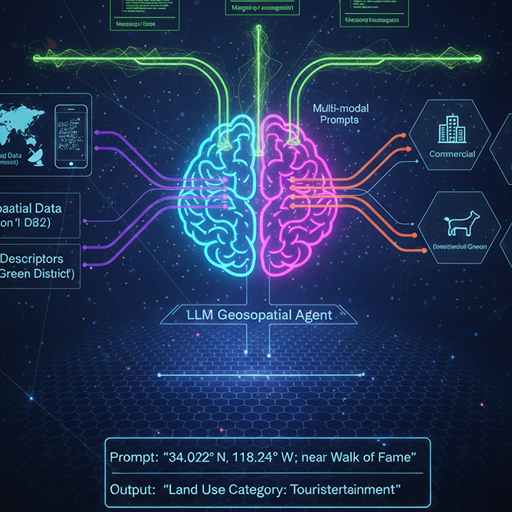
LLM for Urban Land Use Semantics
Fine-tuning LLMs to interpret urban surfaces using a fusion of spatial coordinates and contextual text prompts.
To the code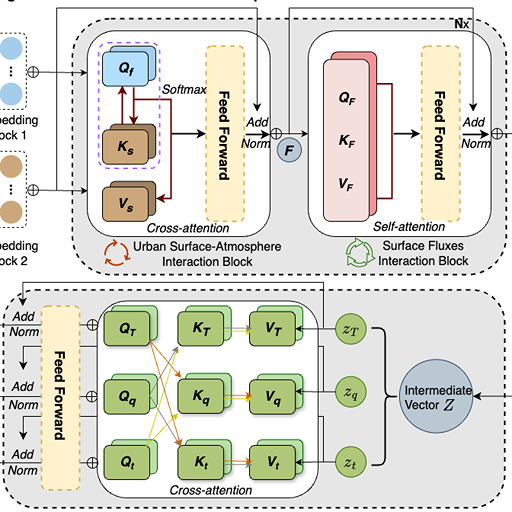
The Challenge: urban areas constitute only ~8% of grid cells in coarse-resolution global climate models, leading to their marginalization in most ML-based approaches.
And ML models often learn data mapping failing to capture
the physical evolution of urban land-atmosphere interactions.
Our Solution: We propose UCformer, a novel multi-task Transformer that
embeds physical induction directly into its learning structure. This next-generation approach ensures
physically consistent climate emulation with superior generalizability.
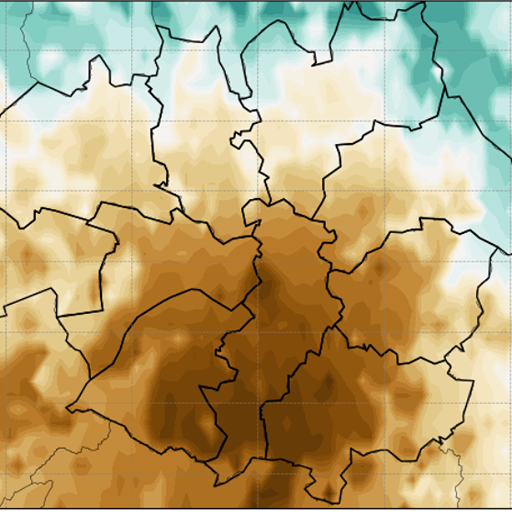
The Full-Stack Vision: Beyond simple prediction, a seamless integration was proposed to link
ML-refined urban surface characterization with high-fidelity climate simulation.
This pipeline bridges the critical gap between raw data and actionable insights—transforming complex physical data into downstream impact assessments, forging a robust path from data to decision.
From city-scale heat disparity to neighborhood-level
vulnerability, this work provides a robust decision-support framework for resilient urban futures.
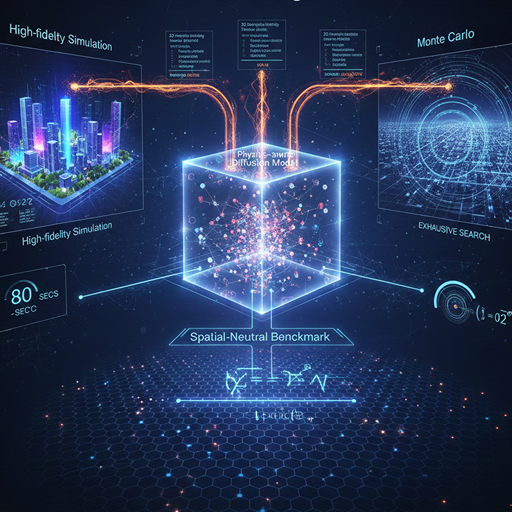
Revolutionizing Urban Climate Adaptation via Physics-aware GenAI . By anchoring rigid physical constraints during the generation process, an optimal balance between precision and speed
has been achieved.
Unlocking the full decision space: Empowering exhaustive adaptation scenario searching via accelerated physics-aware
emulation.
Scaling urban climate intelligence through robust engineering, cross-disciplinary partnerships, and pioneering conceptual frameworks.
Fine-tuning LLMs to interpret urban surfaces using a fusion of spatial coordinates and contextual text prompts.
To the code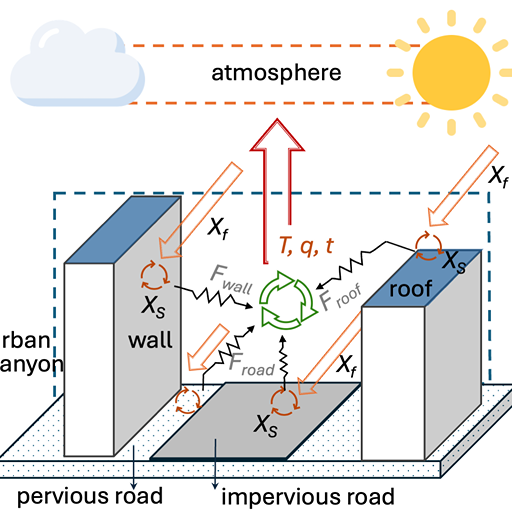
A standardized benchmark for the Earth Science community to identify the most reliable LLMs for climate modeling tasks, fostering AI-driven scientific discovery. Bridging the gap by developing the domain-specific benchmark to evaluate LLMs' reasoning and coding proficiency in urban climate science.
Learn more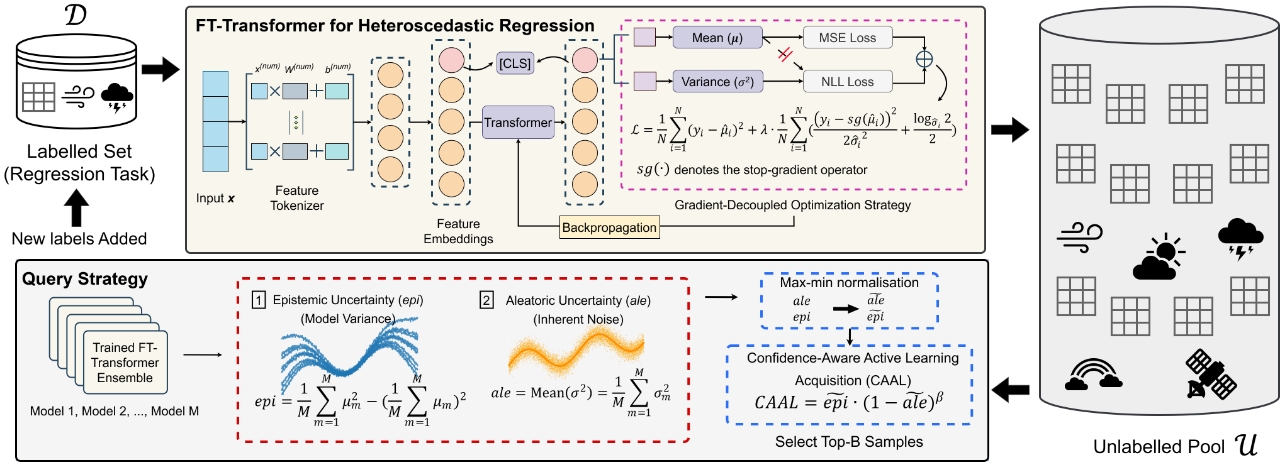
Measuring harmful particle properties is often too slow and expensive to do at scale. The proposed CAAL, an AI framework that smartly filters out data noise to pick the most important samples, making air pollution research more efficient and reliable.
LEAR MORE
I am always looking for opportunities to apply cutting-edge AI to real-world urban challenges. Whether you are from academia or industry, if you are working on Urban Science and AI, let’s explore how we can push the boundaries together.
GET IN TOUCH